

Why Bed Sizes Aren’t Universal
What ‘king’, ‘queen’ and ‘double’ actually tell us

A king-size bed sounds like it should mean the same thing everywhere. It doesn’t.
Single, double, queen and king are familiar names across countries, but the measurements behind them can vary considerably. Even within India, two manufacturers may use slightly different dimensions for the same category.
The reason is fairly simple. Bed sizes did not begin as a global system. They developed locally, alongside the homes, furniture industries and measurement systems of different countries.
Beds grew up with the homes around them

For much of history, beds were pieces of furniture made for particular rooms rather than products built to an international standard. As mattress manufacturing became more organised, individual markets gradually settled on dimensions that made sense within their own context.
Bedroom sizes played a role. So did local bed frames, manufacturing practices and the amount of space people expected around a bed. Countries working in inches also developed different sizing grids from those working in centimetres.
Over time, each system became familiar enough to feel standard.
The names travelled more easily than the measurements did.
A ‘king’ is really a category

This is where much of the confusion comes from.
King, queen and double sound like measurements, but they are better understood as category names. A king generally means one of the larger mattresses within a particular market. Another country may use the same word for a different set of dimensions.
India is especially flexible in this respect. Mattress brands often offer several lengths, and sometimes widths, within the same broad size category.
That flexibility can be useful when fitting a bed into a particular room. It also means the label alone doesn't tell you everything you need to know.
Bedding inherits the difference

Once mattresses vary, the textiles around them vary too.
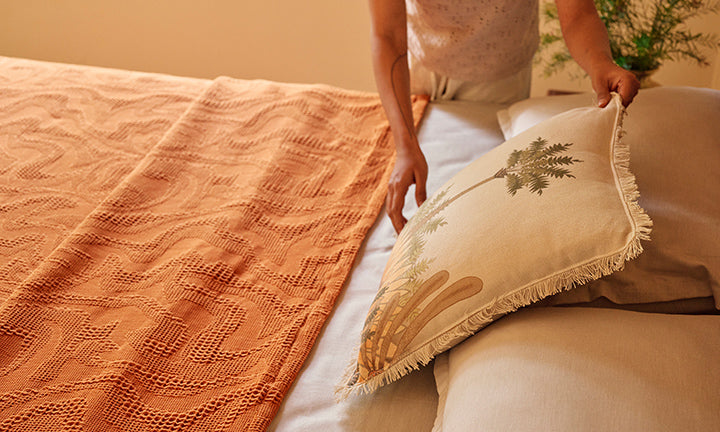
A fitted sheet needs to match the mattress width, length, and depth closely. A duvet cover needs to fit the duvet inside it. Bed covers and comforters allow more room, but their dimensions determine how much fabric falls over the sides and foot of the bed.
This is why two products labelled “king” can sit very differently on the same mattress.
At Oodaii, we see the size name as a useful starting point, not the whole answer. With bedding, the actual dimensions matter because they determine how the piece will fit, fall and layer on the bed.
Measure the bed, not the label

The simplest way to avoid confusion is to work from measurements.
For sheets, measure the width, length and depth of the mattress. Mattress depth matters most for fitted sheets.
For duvet covers, check the dimensions of the duvet itself, rather than relying only on the mattress size beneath it.
For comforters and bed covers, measure the mattress, then decide how much drop you prefer on the sides and at the foot of the bed. A deeper mattress or a taller bed may need more fabric than the size name suggests.
When buying across brands, always compare the measurements listed for the product rather than assuming one brand’s king will match another’s.
The numbers tell you more than the name
Bed size labels are useful because they give us a shared shorthand. They were never meant to function as universal measurements.
A king in one country developed from a different set of homes, industries and conventions from a king somewhere else. The name stayed the same while the rectangle changed.
So when it comes to bedding, the safest question is a very simple one:
How big is your bed, actually?
That measurement will usually tell you far more than the crown on the label.
Leave a comment
This site is protected by hCaptcha and the hCaptcha Privacy Policy and Terms of Service apply.