
Article: What Air Pollution Leaves Behind on Fabric
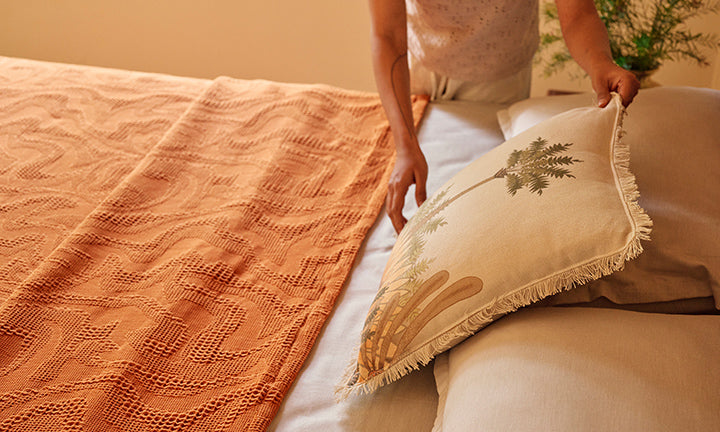
What Air Pollution Leaves Behind on Fabric
How urban air settles into the textiles around us
Air pollution is usually discussed in terms of what we breathe. But the same air also moves through our homes, across balconies, into bedrooms and over the textiles we use every day.
Curtains near open windows, towels drying outdoors, bed linen aired on balconies and cushions left close to doors all interact with the particles carried through urban air. Dust, soot and other fine matter can settle onto fabric surfaces and, over time, change how those textiles look, smell and feel.
This reminds us that fabric is never completely separate from its environment.
Fabric is very good at holding on to things

Textiles have large, irregular surfaces made up of fibres, loops and tiny spaces between yarns. That structure helps with softness, warmth, and absorbency, but it also means fabric can trap airborne material more easily than a smooth surface might.
Dust is the most obvious example. In cities, that dust can include soil particles, vehicle emissions, construction debris and soot. Fine particles can settle into the surface of a textile and remain there until the fabric is shaken, brushed or washed.
This is one reason a towel dried beside a busy road can feel different from one dried indoors, even when both began the day freshly washed.
Outdoor drying comes with a trade-off

Drying textiles in fresh air has clear advantages. Sunlight and airflow help moisture leave the fabric quickly, and for many homes, a balcony or terrace is the most practical place to dry laundry.
But the quality of that outdoor air matters.
In areas with heavy traffic, nearby construction or high levels of airborne dust, fabric can begin collecting particles as it dries. Damp textiles may be especially prone to this because their surface remains moist for part of the drying cycle.
The result may not always be visible. Sometimes it appears as a faint layer of dust. Sometimes it is an odour that returns even though the textile has just been washed.
The bedroom is part of the same environment

Air pollution does not stop at the balcony.
Open windows allow outdoor air to move through bedrooms and living spaces, carrying particles with it. Curtains, upholstered furniture, rugs and bedding can all become collection points simply because they offer so much surface area.
This does not mean textiles should be treated as a problem. It means they are part of the way a home interacts with the air around it.
Regular washing, airing and cleaning help keep that accumulation in check, especially for the pieces we use closest to the skin.
What this means for everyday care

For households in dustier or more polluted areas, small changes can make a difference.
If possible, avoid drying freshly washed towels and bed linen during periods of heavy roadside dust or nearby construction. Bringing laundry in once it is dry also reduces the time it is exposed outdoors.
Curtains and other large textiles near windows often go longer between washes, so remember them as part of regular home care. Bedding and towels, which are washed more frequently anyway, naturally move through a faster cycle of use and cleaning.
The key is to recognise that “clean” fabric keeps interacting with its surroundings the moment it leaves the washing machine.
Designing textiles for the environments they live in

At Oodaii, we often think about textiles in terms of how they behave after they enter a home, not only how they look when they are new.
A towel needs to wash and dry easily. Bed linen needs to move comfortably through repeated cleaning. Fabrics used every day have to respond to heat, humidity, dust and the ordinary conditions of the homes they live in.
Urban air is part of that reality too.
The environment around a textile continues to shape it long after it leaves the loom, whether through sunlight, water, washing, or the air itself.
Fabric keeps a record of its surroundings
We tend to think of textiles as passive objects. In reality, they are constantly exchanging with the spaces around them.
They absorb moisture, collect dust, hold scent and respond to light and air. A towel on a balcony, a curtain by a window, or a bedsheet in an open room quietly takes part in the home's environment.
Air pollution makes that relationship easier to notice.
Sometimes what a fabric carries is simply a trace of the place where it has been living.
Leave a comment
This site is protected by hCaptcha and the hCaptcha Privacy Policy and Terms of Service apply.