
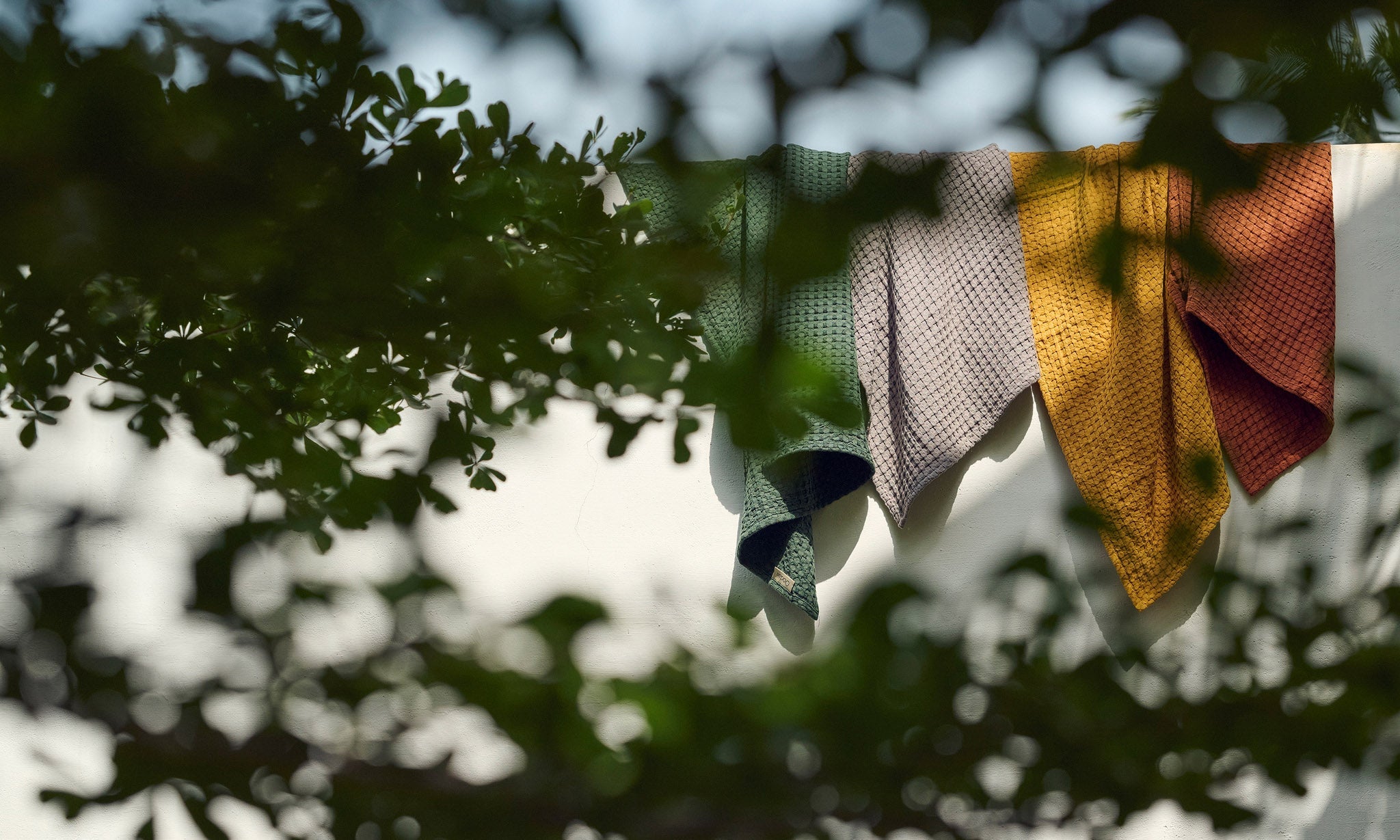
What the Washing Machine Did to Textiles
How one household machine changed what we expect from fabric
The washing machine is so ordinary now that it is easy to think of it simply as a labour-saving device. Its effect on textiles went much further.
Once fabrics began to be washed mechanically, again and again, they had to tolerate friction, detergent, spinning, repeated drying and far more frequent laundering. At the same time, households began to expect towels, sheets and other everyday textiles to return clean, usable and recognisable after every cycle.
The washing machine changed laundry. It also changed what we expected fabric to survive.
When washing was a bigger event

Before mechanical washing became common, laundering large household textiles required considerable time, effort and water. Sheets and towels were therefore washed less casually. They were aired, reused and handled with the knowledge that laundering them was a task in itself.
Mechanical washing changed that rhythm. Use, wash, dry, fold and repeat became part of ordinary domestic life. And once washing became easier, textiles began to experience far more of it.
Fabric under stress

A washing machine is a demanding environment for cloth.
Fabric absorbs water and becomes heavier. It rubs against itself and other textiles, twists, folds and moves through detergent before being spun at speed. Over time, those small stresses add up. Yarns can loosen, colours can fade, surfaces can change, and seams and hems can weaken.
This is why a textile often reveals more about its quality after repeated washing than it does when it is new. A towel can feel wonderful on a shelf. A sheet can look perfectly finished when first unfolded. The more useful question is what remains after fifty washes.
The machine changed what “good” meant

Frequent washing made qualities such as colour retention, dimensional stability and construction increasingly important. It also complicated something as simple as softness.
Some fabrics feel particularly soft when new because of finishing treatments applied to the surface. Washing gradually removes those finishes, leaving the fibre and construction to determine how the textile feels over time. In that sense, the washing machine became an everyday test of how a fabric was actually made.
Towels became especially demanding

Towels are particularly interesting because their absorbency depends on structure. Terry towels use loops to create more surface area, helping them absorb water efficiently. But those exposed loops also experience friction during washing. A towel therefore has to balance absorbency, drying time, weight and durability.
A very dense towel may feel wonderfully plush, but it will also absorb more water and take longer to dry. A lighter construction may feel less substantial at first touch while moving more easily through the cycle of washing, drying and reuse.
There is no single measure of a good towel. Much depends on how it behaves over time.
Clean fabric became an expectation

The washing machine also changed how frequently we expect household textiles to be refreshed. Sheets could be changed regularly. Towels could move through rotation more quickly. Baby textiles, kitchen cloths and bath linens could be washed whenever needed.
Gradually, “freshly washed” became part of the rhythm of the home. The smell of clean sheets, the feel of a newly washed towel and the sight of folded laundry became ordinary experiences precisely because laundering itself had become ordinary.
It changed the home around it

The effect extended beyond fabric.
Homes began making space for washing machines, plumbing connections, laundry baskets, drying racks and storage. In apartments, where the machine sits and where clothes dry became part of domestic planning.
Laundry shifted from an occasional large task into an ongoing household system. Fabric moves constantly through that system, from cupboard to use to wash to drying and back again.
Designing for repeated use

At Oodaii, this is one reason we think about textiles beyond their first impression.
Towels and bed linen will spend much of their lives moving through cycles of use and washing. Decisions around yarn, weave, weight, absorbency, drying and construction therefore have to continue making sense over time.
The first touch matters. So does the fiftieth wash.
The textile we live with today
It is easy to imagine that the washing machine simply adapted to the fabrics already in our homes. The relationship worked both ways. Machines changed how often we washed. That changed what households expected. And those expectations influenced how everyday textiles were made.
Today, we assume that towels will remain absorbent, sheets will hold their shape, and colours will survive repeated washing. Those expectations feel ordinary now. The washing machine helped make them so.
Leave a comment
This site is protected by hCaptcha and the hCaptcha Privacy Policy and Terms of Service apply.