
Article: What Shipping Does to Soft Textiles
What Shipping Does to Soft Textiles
What happens between folding, packing and unpacking

A towel, comforter, or bed cover rarely travels in the same form it will eventually be used in.
Before it reaches a home, it is folded, packed, stacked, transported and often compressed into a fraction of the space it will occupy once opened. For something designed to feel soft, lofty, or relaxed, that journey can temporarily change how it looks and feels.
Soft things take up a surprising amount of space

Textiles contain a lot of air.
The loops of a terry towel, the folds of a gauze fabric and the filling inside a comforter all create volume. That is part of what gives these products their softness, absorbency or loft, but it also makes them bulky to store and transport.
Folding and compression reduce that volume by pushing air out and bringing layers closer together. This makes shipping more efficient, but it also means the textile spends part of its journey held in a shape very different from the one it was designed to take.
Once unpacked, the material has to relax again.
Compression changes the first impression

This is often most obvious with towels.
A freshly made terry towel has thousands of loops standing away from the surface. When you fold several towels tightly and stack them under pressure, those loops can flatten temporarily. The towel may feel denser or less plush straight out of the package than after it has been opened, shaken out, or washed.
Comforters respond in a similar way. Their filling can compress during packing, making the piece look thinner when first opened. As air moves back through the layers and the filling redistributes, the comforter begins to regain its fuller shape.
Folds leave their own memory

Compression is only part of the story. Folding also affects how a textile first appears.
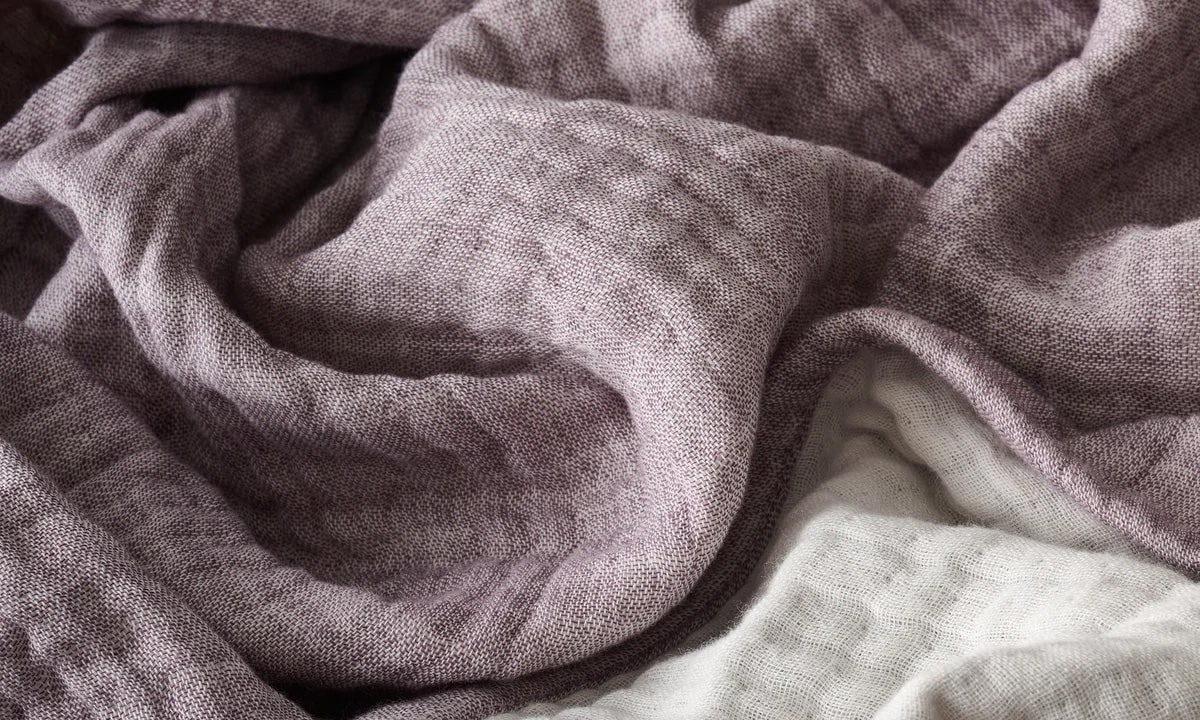
A bed cover that has travelled folded into a rectangle may arrive with sharp crease lines. Gauze, chambray and other softer weaves may hold those folds differently depending on their construction. Some relax quickly once spread out, while others need a little more time, movement or washing.
That is why a textile straight from the box isn't always the best representation of how it will look after a few days of use. Fabric responds to movement, gravity and air. Once it is unfolded and allowed to settle, its natural drape begins to return.
The journey itself matters
Shipping also exposes textiles to changing conditions.
Packages move through warehouses, vehicles and storage spaces where temperature and humidity can vary. Good packaging therefore has more than one job. It has to keep the textile clean and protected while also avoiding unnecessary pressure or moisture during transit.
Packaging something too loosely takes up more space and can allow the product to shift around. Packing it too tightly can exaggerate creases and flatten texture. The aim is to protect the textile while keeping compression appropriate to the product inside.
A dense towel and a filled comforter don't necessarily need to be packed the same way.
What to do when a textile arrives

Most soft textiles benefit from a little time after unpacking.
Towels can be opened out and shaken before their first wash, which helps the loops loosen from the compressed fold. Bedding can be spread across the bed rather than judged immediately from the package. Comforters can be gently shaken and left open so the filling has room to redistribute.
Washing often changes the first impression again. Water, movement and drying allow yarns and fibres to settle into the form they will take during normal use.
In other words, the textile you remove from the box is often only halfway through its journey.
Thinking about the journey at Oodaii
At Oodaii, a finished textile has to work beyond the point at which it leaves the factory.
Towels, bedding, and comforters all travel differently because their structures differ. A waffle towel, a terry towel and a filled comforter each respond to folding and pressure in their own way. Packaging therefore becomes part of thinking about how the product reaches the customer, not simply how it looks inside the box.
The goal is for the textile to arrive protected, then return easily to the texture, drape, and volume it was designed to have.

Leave a comment
This site is protected by hCaptcha and the hCaptcha Privacy Policy and Terms of Service apply.