

The Return of Personal Corners and Why they Matter.
Why Small, Defined Spaces Matter More Than Ever

Homes today are doing more than they were designed for.
Work happens where we once only relaxed. Meals move between the table, couch, and bed. Even rest is split between scrolling, watching, and actually switching off. The result is not just busier rooms. It is a blurred use.
When everything happens everywhere, it becomes harder to settle into any one activity. This is where smaller, defined spaces start to matter.
The Problem with Multi-Use Rooms

A single room can hold multiple functions. That is not the issue.
The problem begins when there is no distinction between them. If the same surface is used for work, eating, and resting, the body does not register a clear shift. The space does not signal what it is meant for.
Over time, this creates friction. You sit down to rest, but the environment still feels active. You try to focus, but the setup feels temporary. The space works, but it does not support what you are trying to do.
How Small Zones Solve This

You do not need a separate room to create separation. A defined corner within the same room can be enough.
A consistent spot to sit. A fixed edge of the bed that is used differently from the rest. A section of the room that remains set up for a single activity.
The key is not size. It is consistency.
When a space is used in the same way repeatedly, it begins to hold that function. The body starts to recognise it, and the transition becomes easier.
What Actually Creates a Corner

These spaces are not built with furniture alone. They are created through surfaces.
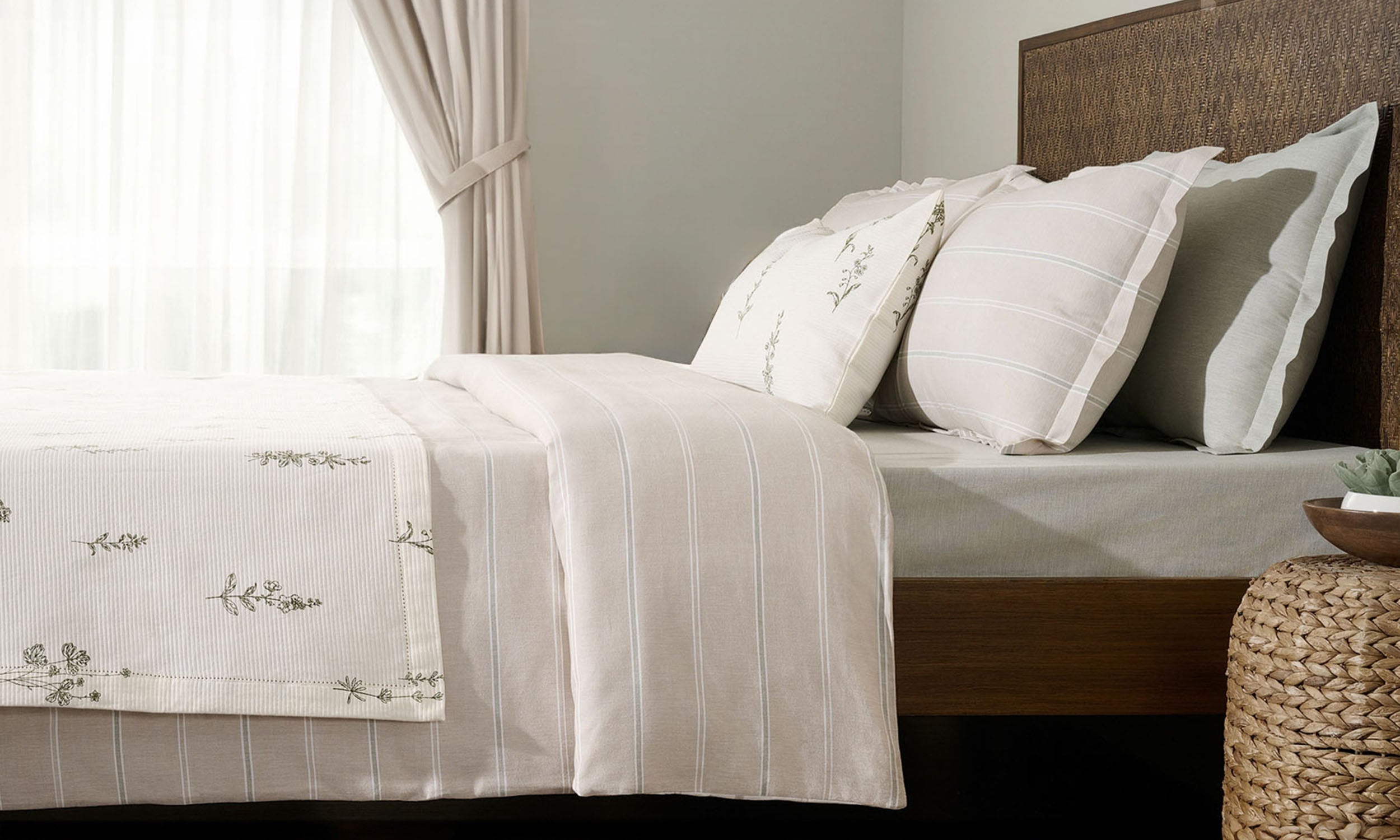
A chair without anything on it is just another seat. Add a layer that stays there, and it becomes a place you return to. A bed used only for sleeping feels different from one that also holds a defined sitting area. The distinction comes from how the surface is set up and maintained.
A bare floor is neutral. A covered section becomes intentional.
The change is minimal, but the effect is clear.
Why Textiles Matter Here

Textiles create these shifts without permanently fixing the space. They define use without restricting it.
A throw on a chair signals that it is meant to be used. It also changes how long you stay there. You settle in more easily. A layered section on a bed creates a boundary between resting and sitting. Without it, the entire surface feels the same.
A towel or robe placed within reach marks a transition point. It belongs to a specific moment, not the entire room.
These are not decorative decisions. They are functional markers.
The Difference Between Space and Use
Two homes can have the same layout and still feel very different. One feels scattered. The other feels settled.
The difference often comes down to whether spaces have defined uses, even within the same room. Without that definition, movement feels continuous. There is no clear start or end to an activity. With it, even small actions feel more contained.
Relevance to Oodaii

Oodaii products work best when they are used to create these small distinctions.
A lightweight throw can turn a chair into a place you sit for longer. Bedding, when layered, can separate rest from everything else that happens on the same surface.
Towels and robes often sit at transition points. After a shower. Before stepping out. They belong to specific moments, and placing them accordingly reinforces that shift.
A More Usable Way to Live
The shift is not towards bigger homes or more rooms. It is towards better-defined use within the same space.
Small, consistent corners allow a room to support different parts of the day without conflict. They make it easier to move between activities without carrying the last one forward.
Over time, the home begins to feel easier to use, not just complete.

Leave a comment
This site is protected by hCaptcha and the hCaptcha Privacy Policy and Terms of Service apply.