
Sleep and Status : What Bedding Has Signalled Through History
From pharaohs to French royalty, what lay on a bed once spoke clearly of class, power, and access. Long before beds became private spaces, they were public markers. What you slept on was not just about rest, but about what you owned and where you stood in society.
Egypt: Linen and Access

In ancient Egypt, beds were raised wooden platforms, often carved and sometimes gilded. They were reserved for those who could afford them. Linen sheets, woven from flax grown along the Nile, carried their own meaning. A crisp white surface suggested access to resources and labour. For most people, this level of comfort was not available.
China: Silk and Symbol

In imperial China, silk bedding became closely tied to rank, particularly during the Tang and Song dynasties. The material itself mattered, but so did what was woven into it. Motifs such as dragons, clouds, and celestial forms were not decorative choices. They carried meaning and signalled position. To sleep on silk was to align with a certain order, one that extended beyond everyday life.
Europe: The Bed as Display

In 17th-century Europe, the bed was a part of public life. The ritual of the levée placed kings upright against layers of pillows and covers, receiving visitors and conducting affairs from within their chambers. The bed served as a display setting. Curtains, fabrics, and arrangements all contributed to how authority was presented.
India: Layers of Influence

In colonised India, bedding reflected a mix of influences. Persian patterns, British preferences, and local techniques often existed together. Cotton sheets, block-printed quilts, and embroidered layers carried traces of both adaptation and imposition. The bed became a site where identity, whether chosen or imposed, was visible in material form.
Trade and Material Access
Across regions, bedding also reflected access to trade. Cotton from India, silk from China, lace from Europe, and feathers from colder climates found their way into layered arrangements. The materials used in a bed could point to movement across geographies and networks of exchange. What was available to one household was not available to another.
Today: Private, Yet Telling

Today, beds are no longer stages for public life, but the choices around them still reflect how we think about rest. Preferences for structure or softness, minimal layering or fuller arrangements, and even whether a bed is made or left as it is, all suggest something about how a space is used.
At Oodaii
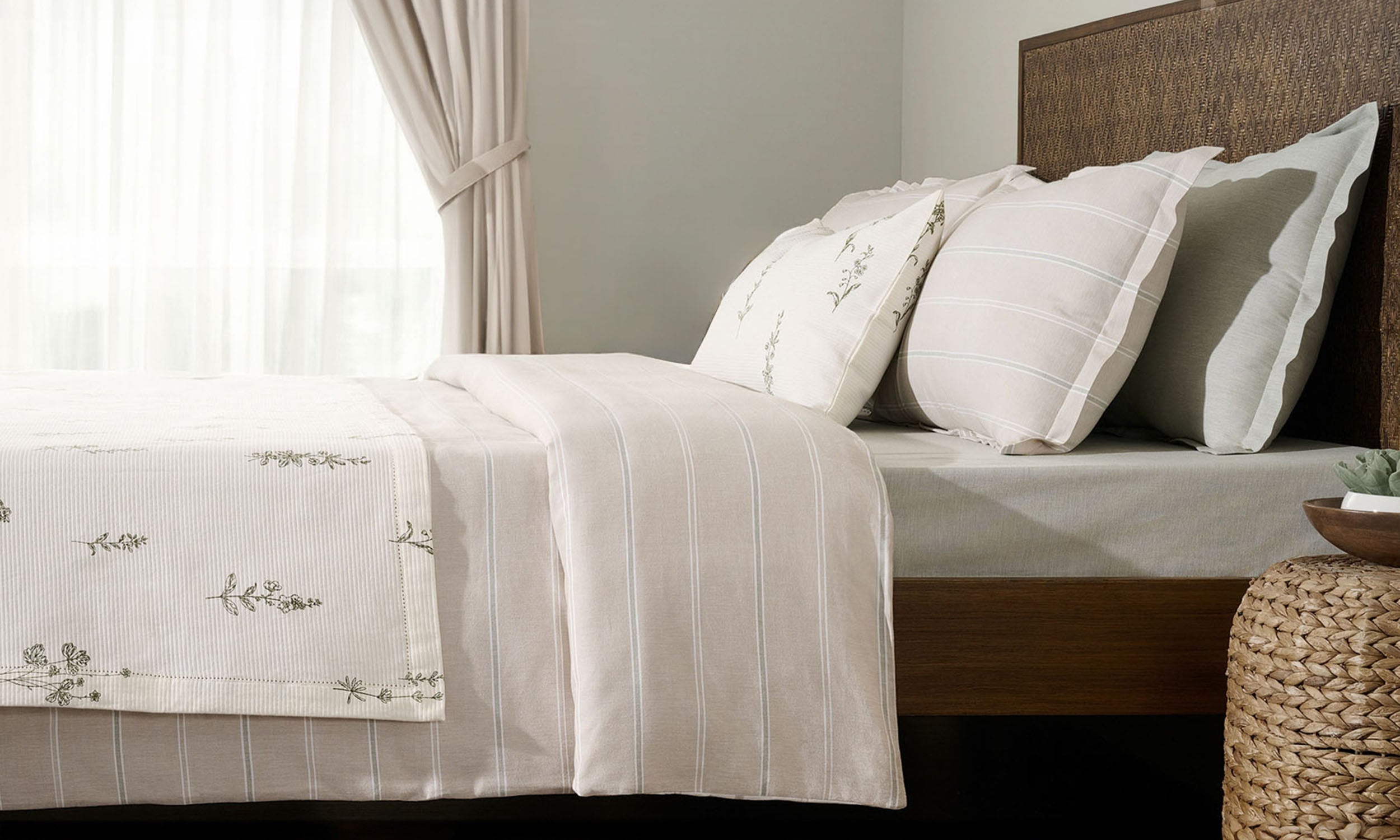
At Oodaii, bedding is approached with this in mind. It is not treated as a display, but as something that shapes how rest is experienced over time. Cotton and cotton-bamboo textiles are designed to remain breathable, sit comfortably in use, and hold up to regular handling. The intention is not to signal status, but to offer something steady and reliable. A form of everyday luxury that does not need to draw attention to itself.


Leave a comment
This site is protected by hCaptcha and the hCaptcha Privacy Policy and Terms of Service apply.