Textile Waste: The Leftovers
When we think of textile waste, we often imagine piles of discarded clothing or factory offcuts heaped on cutting-room floors. But the truth is, waste begins much earlier, in millimetres trimmed off a weave, in shapes that don't nest together perfectly, and in choices that value sharp design over full material use.
At Oodaii, we’ve learned that some of the most important decisions happen in the margins — literally.
The “Extra Inches” No One Sees

Every piece of fabric starts as a rectangle. Every towel, cover, robe, or wrap starts as a shape cut from a larger one. And between those two facts lie the offcuts — slivers too narrow to use, curves cut from straight edges, test prints that never make it into the final product.
Sometimes these pieces are big enough to reuse as internal ties or trim details. Sometimes they’re only suitable for stuffing, patching, or samples. And sometimes they sit quietly in bins, waiting for someone to ask, Can we use this for something else?
Waste That Hides in Good Design

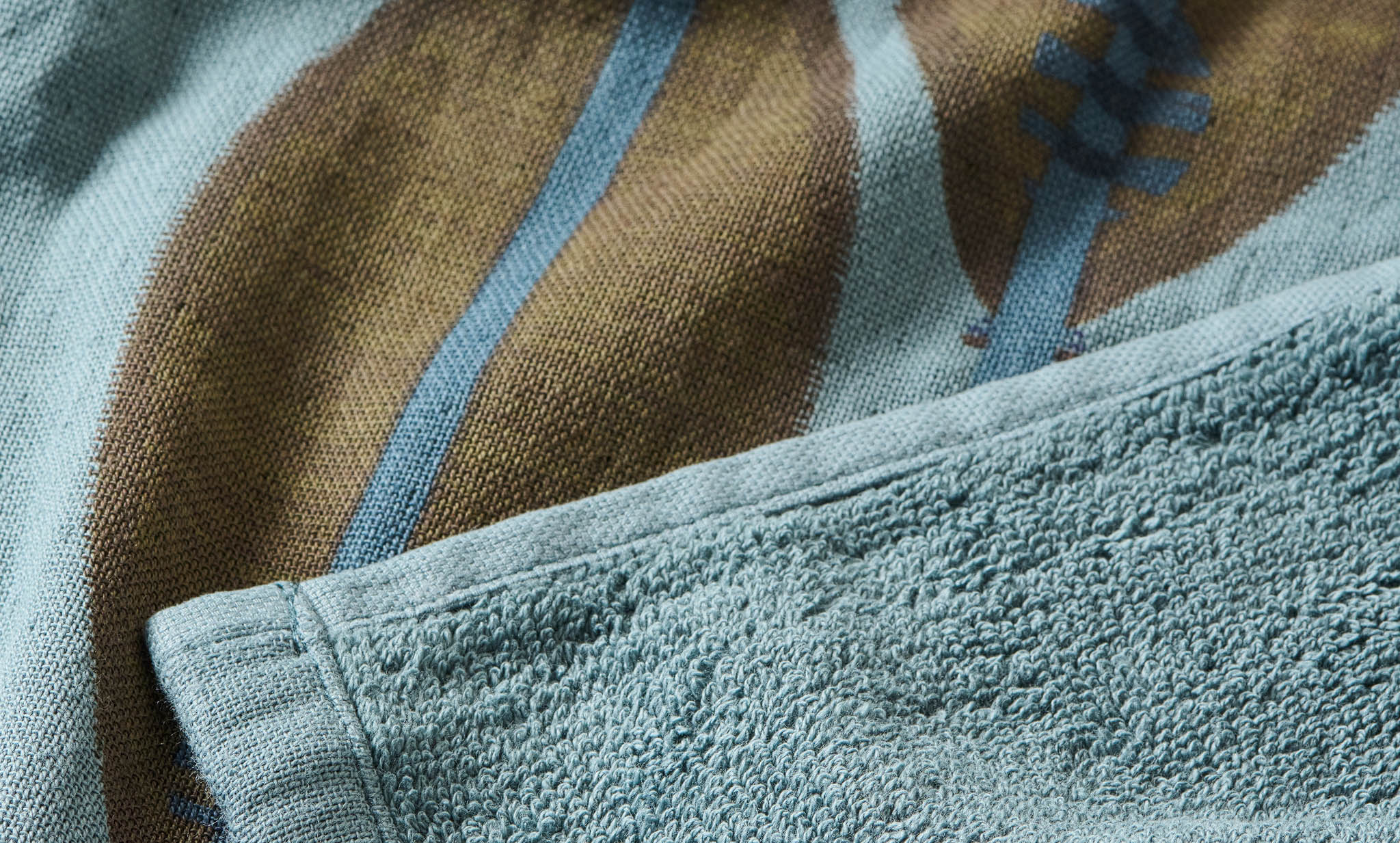
Some kinds of waste are built into how a product is made. Take a curved neckline on a robe, or a shaped handle on a bag. These require precision cutting, which means accepting a degree of leftover fabric. A fully patterned jacquard or a carefully dip-dyed towel often demands perfect alignment. That means trimming the edges.
Designers know this. The best ones make peace with it and then ask what happens next.
Waste That Comes From Saying No

Sometimes the waste is philosophical. At Oodaii, we often reject fabric rolls with inconsistent dye lots, irregular weave tension, or print alignment that doesn’t meet our standards. That’s not scrap, it’s surplus. It hasn’t failed functionally. It just doesn’t feel right to send it to someone’s home.
Where does that go? Into the sample stock. Into internal use. Into local reuse. Or sometimes, into nothing, which is a hard truth to sit with.
What We’re Doing, and What We’re Still Figuring Out

We’ve begun turning leftover waffle-weave panels into smaller products, such as pouches, hair wraps, and inner linings. We've worked with local vendors to upcycle and have donated usable stock to neighbouring communities.
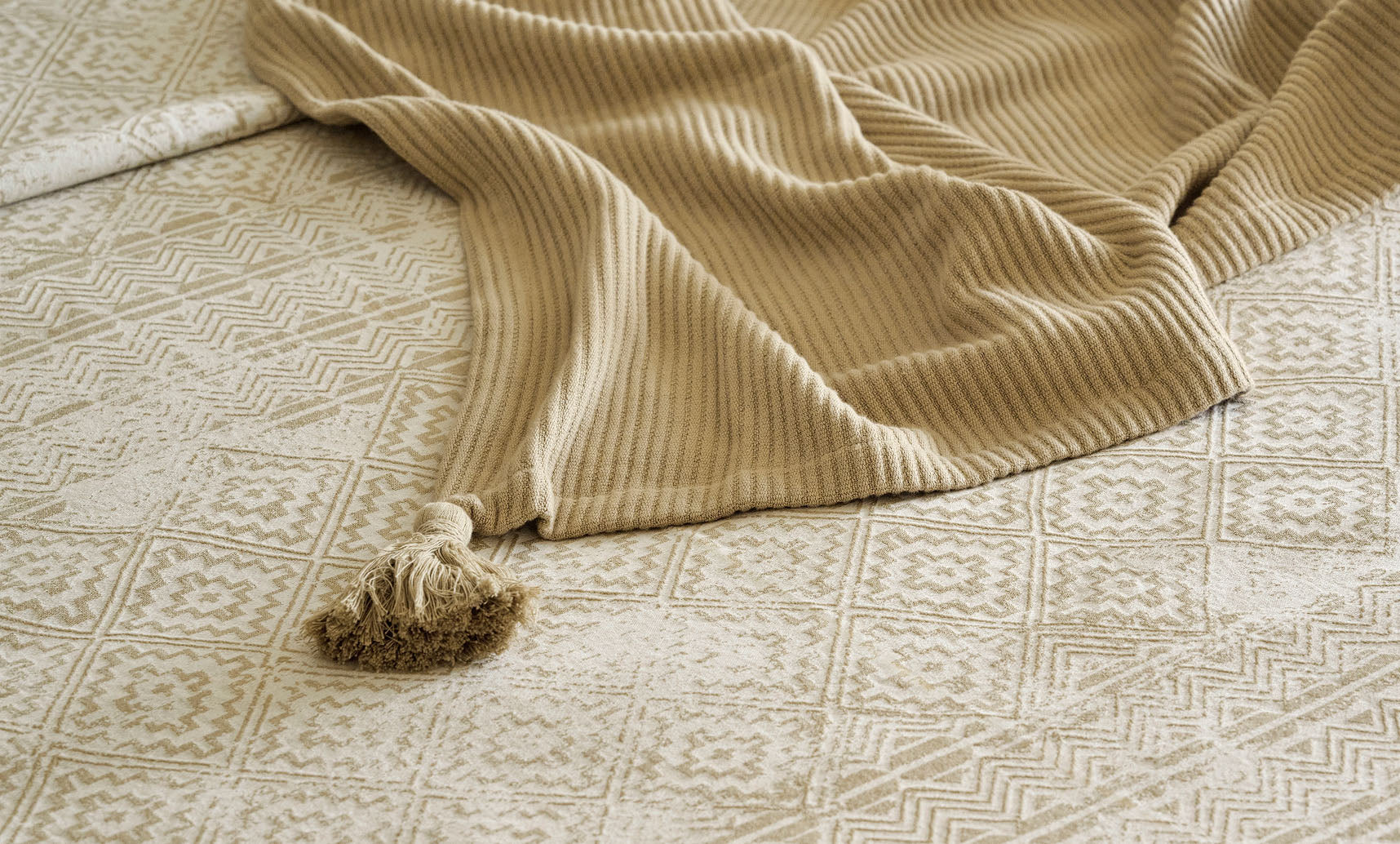
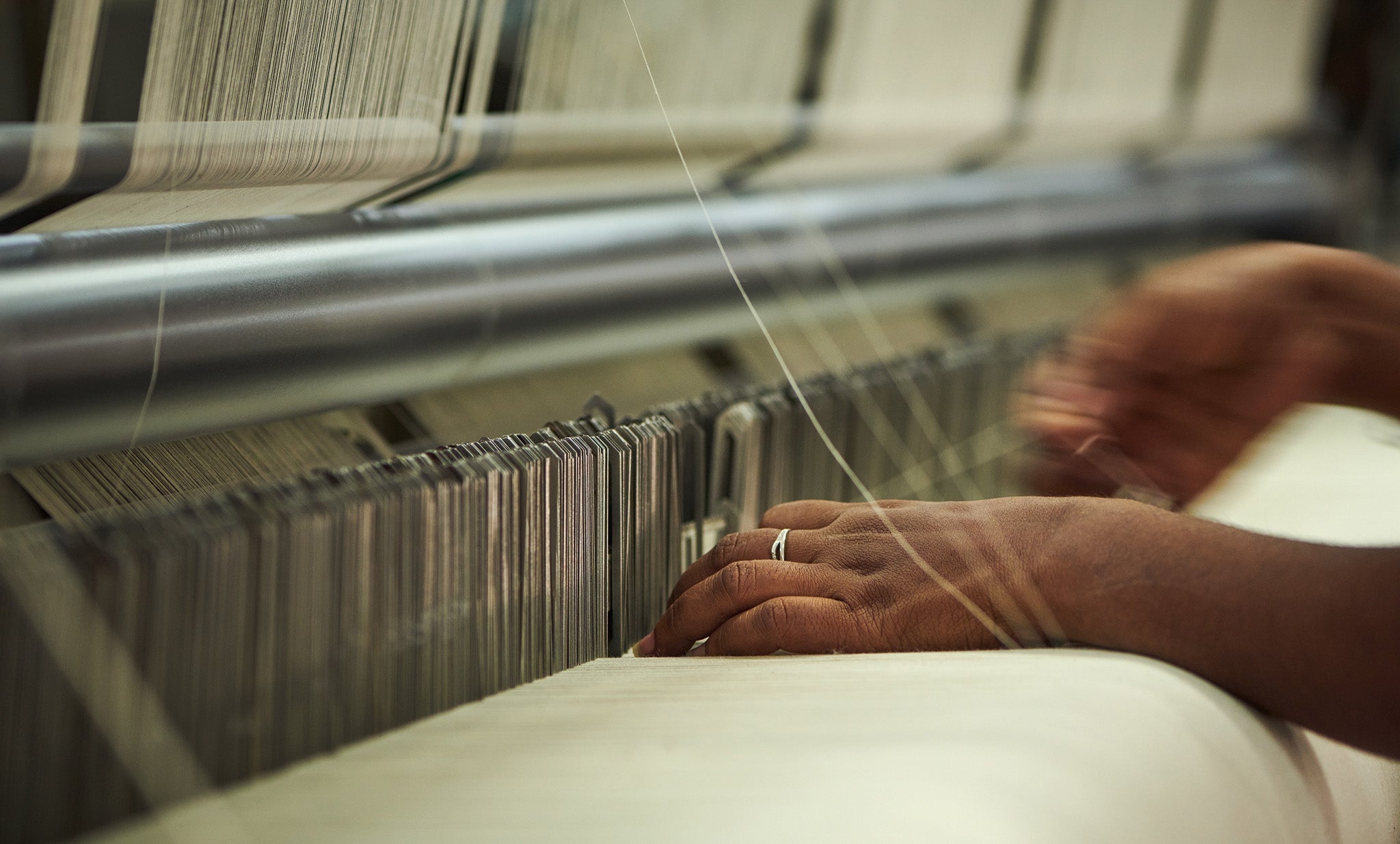
Some solutions begin even before the fabric is cut. For our jacquard bed covers, we weave on the wider loom when a design needs more room for a clean finish. That leaves narrow strips along the edges. Instead of discarding them, we turn those strips into the lumbar cushions and pillowcases that accompany the cover.
Having said that, we’re also aware that true sustainability isn't just about clever reuse. It's about a more innovative design. Nesting product patterns more efficiently. Rethinking the size and proportion of our cuts and using fewer unique shapes across collections.
It’s not glamorous. But neither is waste. And we’d rather face it, head-on.
Why This Matters to You

It’s because you don’t always see what’s been left out, and that’s the point. A well-finished towel doesn’t reveal the piece that was trimmed away to align the print. A bed cover that drapes evenly might have taken three test runs to get right.
If you’ve ever held an Oodaii product and felt like it just fits, know this: that fit came with choices. And some of those choices came with scraps. We're learning to respect those scraps, too.
Leave a comment
This site is protected by hCaptcha and the hCaptcha Privacy Policy and Terms of Service apply.